
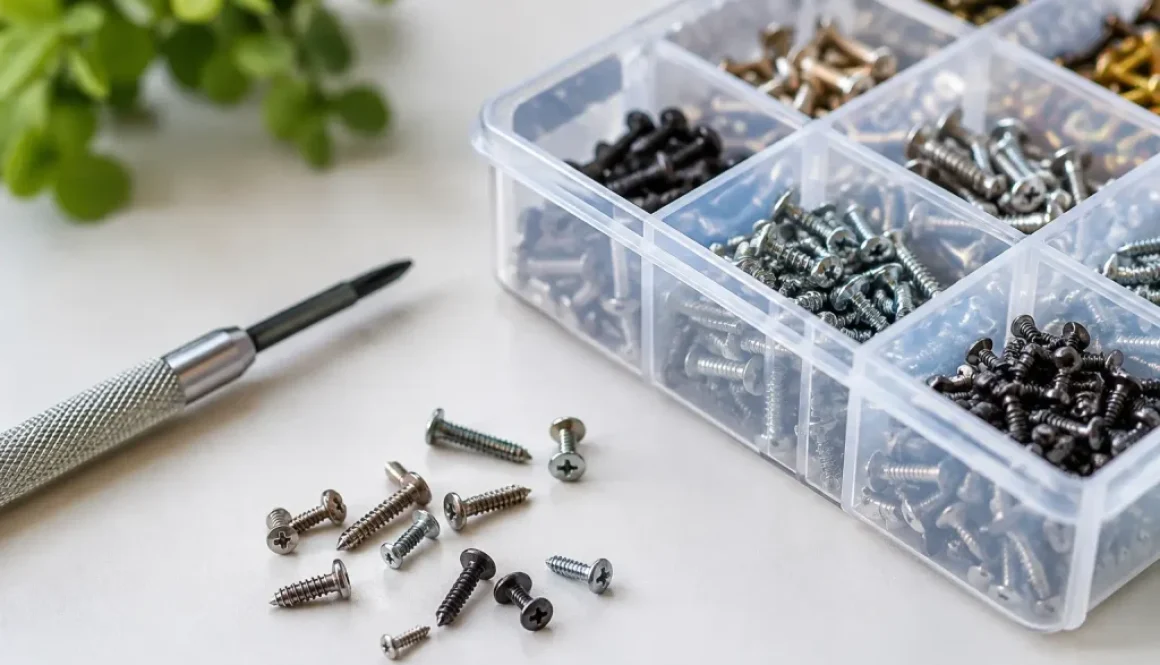
Where to Buy Miniature Screws in Australia
A missing M2 screw can stop a drone repair, leave a 3D-printed assembly loose or hold up a small production run. If you are wondering where to buy miniature screws in Australia, start with a specialist fastener supplier that identifies sizes properly and carries the matching nuts, washers, taps and drivers. Small screws are not just smaller versions of hardware-store fasteners – thread, head style, material and length all matter.
At Micro Fasteners, we have been helping customers find hard-to-source fasteners since 1989. Our miniature range covers machine and socket screws from M1.0 to M3.5, plus imperial sizes from #00 to #10, along with small self-tappers, nuts, washers, rivets, drills and taps. Small name – HUGE range!
Where to buy miniature screws in Australia
For a one-off repair, prototype or regular manufacturing requirement, buy from a supplier that lists the screw diameter, thread and length clearly. You need to be able to order the exact part rather than settling for a screw that is close enough. A close match can strip a tapped hole, crack plastic or fail to seat correctly in a countersunk recess.
We supply online across Australia and from our Thomastown, Victoria counter. You can buy individual fasteners, bags or boxes, depending on the job. That is useful when you need two M1.6 screws for an electronics repair, as well as when you need consistent quantities for assembly work. Prices are shown excluding GST.
If you are unsure, call us before ordering. The most useful details are the thread diameter, length, head type, material and what the screw is fastening into. A clear photo beside a ruler can help, but a measurement is better.
Start with the thread: metric or imperial?
The first job is identifying whether the screw is metric or imperial. Metric miniature machine screws are measured by outside thread diameter in millimetres, such as M1.6, M2, M2.5 or M3. An M3 screw has an outside thread diameter of about 3 mm. Its length is normally measured from under the head for pan head, button head and socket cap screws.
Imperial screws use gauge sizes. Common small sizes include #00, #0, #1, #2, #4, #6, #8 and #10. They may also use UNC or UNF thread forms. UNC means Unified National Coarse and UNF means Unified National Fine. Fine threads give more threads over a short length, but they must match the mating part exactly.
Do not force a metric screw into an imperial thread, or the other way around. M3 and #4 can look similar, for example, but they are not interchangeable. The diameter and thread pitch differ. Thread pitch is the distance from one thread to the next, and it is just as important as the nominal diameter.
Common miniature screw sizes
| Size | Typical uses | What to check | |—|—|—| | M1.0-M1.4 | Watches, eyewear, delicate instruments | Head diameter and thread pitch | | M1.6-M2 | Small electronics, cameras, model work | Length and driver recess | | M2.5-M3 | Circuit boards, 3D printers, drones | Material and head clearance | | M3.5 | Small machinery and enclosures | Thread pitch and strength | | #00-#2 | Vintage repairs, instruments, imported equipment | Imperial thread type | | #4-#10 | Electrical fittings, light assemblies, general repairs | UNC, UNF or self-tapping form |
The application gives useful clues, but it does not prove the thread. Imported equipment can use either system, and older items may use less common threads. For restorations, keep the original screw if possible and compare it before buying replacements.
Choose the right head before you order
A screw can have the correct thread and still be wrong for the assembly if the head profile does not suit. Socket cap screws have a cylindrical head and an internal hex drive. They are popular where strength and neat access matter, particularly in machinery, robotics and 3D-printer assemblies.
Button head socket screws sit lower and have a rounded profile. Pan head screws are common in electronics and general fastening. Countersunk screws have a flat top that sits flush when used with the correct countersunk hole. If you replace a pan head with a countersunk screw, it may pull into the material differently or leave the part sitting proud.
Also check the drive. Tiny Phillips, slotted and hex socket drives each need the correct bit or key. Using an oversized driver is a quick way to damage the recess. For very small socket screws, make sure you have a quality hex key or driver bit that fits fully before applying force.
Material matters more at small sizes
Miniature screws are easy to bend, round off or corrode if the material is wrong. For indoor electronics, zinc-plated steel is often suitable where corrosion exposure is low. Plain steel may be appropriate for dry, protected applications, but it needs consideration if moisture is present.
Stainless steel is a practical choice for outdoor equipment, marine-adjacent work and repairs where corrosion resistance matters. Grade 304 stainless suits many general outdoor jobs. Grade 316 has better resistance in coastal and harsher environments. Neither is automatically the right answer: stainless is not as hard as some high tensile steel fasteners, and fine stainless threads can gall or pick up if overtightened.
Brass is useful where appearance, electrical conductivity or corrosion behaviour is relevant. It is softer than steel, so avoid using it where high clamping force is required. High tensile fasteners are made for strength, but that does not mean every miniature assembly needs one. In plastic housings, correct pilot holes and controlled tightening matter more than maximum tensile grade.
Measure a miniature screw properly
A basic vernier caliper makes identifying miniature screws much easier. Measure the outside diameter across the threads, then the length. For most raised-head screws, measure from directly under the head to the tip. For countersunk screws, measure the overall length because the head is designed to sit within the material.
Next, compare the thread. A thread gauge is the best option, particularly for imperial screws and fine pitches. If you do not have one, try threading the screw gently into a known matching nut. It should turn freely by hand for several threads. Stop immediately if it binds.
When matching a screw for a blind hole, check the available depth. A screw that is 2 mm too long may bottom out before it clamps the part. If it reaches a circuit board or internal component, the result can be more expensive than the missing fastener.
Give us these details for a quicker enquiry
For an accurate recommendation, tell us the diameter or gauge, thread type if known, length, head style and material. Also let us know whether it goes into a threaded metal hole, a nut, timber, sheet metal or plastic. For self-tapping screws, the material thickness and pilot-hole size are especially helpful.
A screw marked M2 x 6 means a 2 mm metric thread with a 6 mm length. You may also need the pitch, such as M3 x 0.5, where there is more than one possible thread. For imperial screws, include the gauge and threads per inch where known, such as #4-40 UNC.
When you need more than a screw
Miniature jobs often need matching hardware. A machine screw may require a nut, flat washer and spring washer, depending on vibration and clamping needs. A washer spreads the load and can protect soft plastic, painted surfaces or thin sheet. For assemblies that loosen under vibration, consider an appropriate locking method, but make sure it suits the material and whether the unit needs future servicing.
If you are tapping a new hole, use the matching tap and correct tapping drill size. Small taps are delicate. Keep the work square, use cutting lubricant where suitable and back the tap out regularly to clear swarf. Forcing a broken M1.6 tap out of a small part is nobody’s idea of a good afternoon.
FAQ
Can I buy miniature screws individually?
Yes. Individual purchasing is handy for repairs and testing a size before committing to a bag or box. For repeat assembly or maintenance work, bags and boxes are usually more practical.
Are miniature screws suitable for 3D-printed parts?
They can be, provided the design allows for them. Machine screws work well with heat-set inserts or captive nuts. Small self-tappers can work directly in plastic, but use the recommended pilot hole and avoid overtightening, especially in brittle filament.
What is the smallest screw size available?
Our miniature machine and socket screw range begins at M1.0 and #00. The best choice depends on the thread, head shape, length and material required for your application.
Should I use 304 or 316 stainless steel?
Use 304 for many general indoor and outdoor applications. Choose 316 where exposure is more severe, particularly near the coast or around saltwater. If strength, magnetic properties or electrical requirements matter, ask before selecting.
Bring in a sample at our Thomastown counter, shop online, or call us on 03 9464 0330 with the measurements you have. If you buy regularly for manufacturing, maintenance or trade work, you can also apply for a trade account. The right miniature screw is usually out there – it just needs to be identified before it is fitted.